
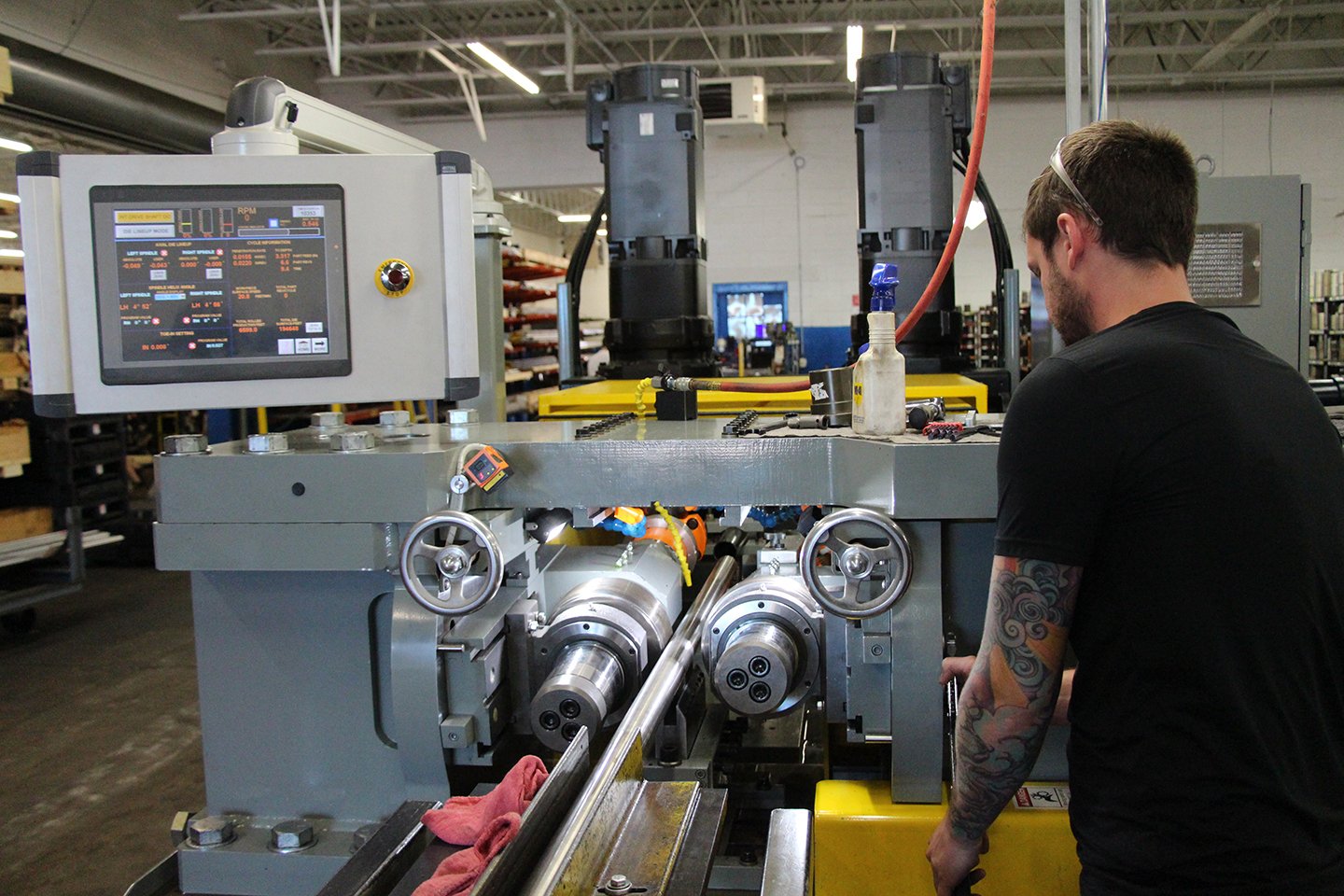
When it comes to producing reliable, high-performance fasteners, manufacturers are increasingly turning to rolled threads instead of traditional cutting, chasing, or grinding methods. The reason is simple: thread rolling delivers stronger threads, better consistency, faster production, and lower overall costs. For high-volume manufacturing environments where quality and efficiency matter, rolled threads have become the preferred choice.
What Is Thread Rolling?
Thread rolling is a cold-forming process that creates threads by displacing material rather than removing it. Using precision-engineered rolling dies, the metal blank is pressed and shaped into the final thread form. Because the material flows into the thread profile instead of being cut away, the finished thread closely mirrors the die geometry with exceptional accuracy.
Unlike cutting processes that interrupt the natural structure of the material, thread rolling preserves and reshapes it. This difference in how the material is formed is at the heart of why rolled threads outperform their cut counterparts in many demanding applications.
Stronger Threads by Design
One of the most important reasons manufacturers choose rolled threads is strength. During the rolling process, the metal’s grain structure is reoriented to follow the contour of the thread. This creates a continuous grain flow that reinforces the thread profile, particularly at the root where failures most often occur.
The cold-working action of thread rolling can increase tensile strength by up to 30% compared to cut threads. In addition, compressive stresses are introduced at the thread root, helping the fastener resist cracking and failure under load. The result is a thread that is better equipped to handle high stress, vibration, and repeated use.
Superior Fatigue Resistance
Fatigue failure is a major concern in many industrial applications, especially where fasteners experience cyclic loading. The rolling process refines the surface of the thread, producing a smoother finish and eliminating small surface defects that can act as starting points for fatigue cracks.
Thanks to improved surface condition and the compressive stresses created during forming, rolled threads typically deliver 50–75% greater fatigue strength than cut threads. This added durability can significantly extend the service life of components without the need for secondary processes like heat treating.
Faster Production and Lower Costs
Speed is another major factor driving manufacturers toward rolled threads. Thread rolling is a high-speed process that can produce finished threads in a single pass, often up to ten times faster than single-point thread cutting. Faster cycle times translate directly into higher production rates and lower labor costs.
Because thread rolling displaces material rather than cutting it away, there is virtually no scrap generated from the threading operation itself. Manufacturers can use smaller-diameter blanks and avoid material waste, further reducing costs. Over time, these efficiencies add up to a lower cost per part and a more streamlined production process.
Reduced waste doesn’t just benefit the bottom line—it also supports more sustainable manufacturing practices. By eliminating chips and minimizing material loss, thread rolling is an environmentally friendly option for fastener production. Less waste, fewer secondary operations, and efficient use of material all contribute to a smaller environmental footprint.
Why Rolled Threads Unlimited?
At Rolled Threads Unlimited, thread rolling is more than a process, it’s a commitment to performance, efficiency, and reliability. Customers can count on high production rates, cost-effective solutions, and consistently high-quality threads designed to meet demanding specifications.
With decades of experience and a focus on precision, Rolled Threads Unlimited helps manufacturers across industries take advantage of the proven benefits of rolling threads. When strength, fatigue resistance, accuracy, and efficiency matter, rolled threads are the clear choice.